Slab Scaffolding & Falsework Rental: Dubai & Sharjah
Slab scaffolding is a temporary support structure, typically cuplock towers, acrow props, or drop-head propping systems, erected beneath a concrete slab to hold the formwork and wet concrete during pouring and curing. Also known as falsework or shoring in UAE construction.
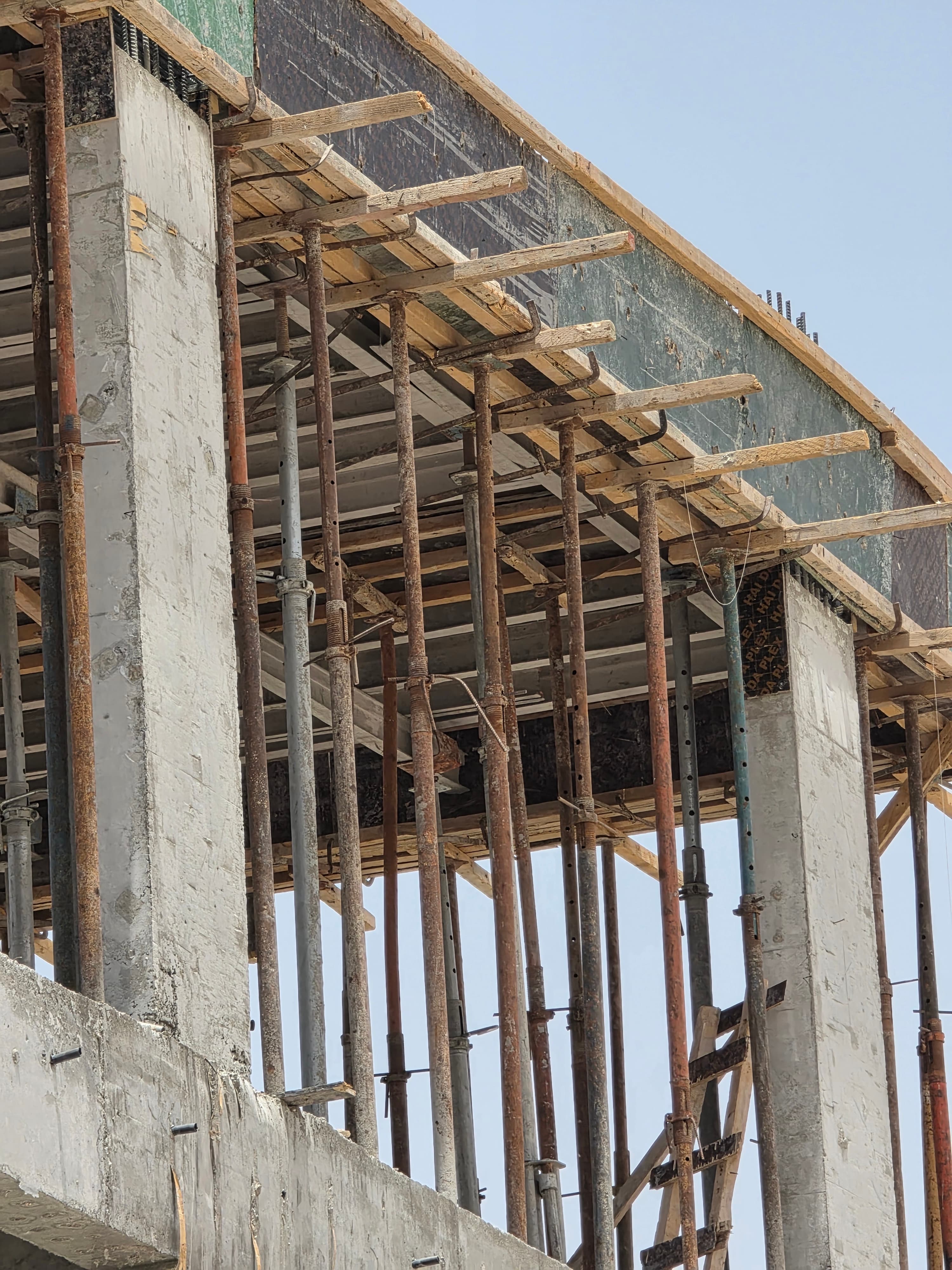
Slab Support Systems We Rent
Britania stocks two slab support systems. Cuplock falsework for heavy loads and large floor plates, and prop-based slab formwork for standard residential and commercial slabs.
Three Slab Beam Sub-Systems Compared
All three systems support concrete slabs during pouring. The right choice depends on project scale, budget, and speed requirements.
| Feature | Infill & Decking Beam | Aluminum Beam + Cuplock | Heavy Duty Jack System |
|---|---|---|---|
| Best for | Budget-friendly projects, standard slabs | Most projects today, fast installation | Large-scale projects, highest capacity |
| Beam material | Steel infill & decking beams | Lightweight aluminum beams + cuplock | Galvanized steel jacks + aluminum beams |
| Setup speed | Slower (more manual labor) | Fast (lightweight, easy to handle) | Fastest (systematic jack setup) |
| Load capacity | Standard | High | Highest |
| Cost | Most economical | Mid-range | Premium |
| Common use | Residential villas, small slabs | Commercial floors, apartments | Podium slabs, transfer beams, towers |
When You Need Slab Scaffolding
Residential Slab Pours
Propping and formwork for villa and low-rise residential floor slabs. Acrow props and plywood panels for standard 150-200mm thick slabs with quick strip and cycle times.
Commercial Floor Plates
Large-area slab formwork for office buildings, malls, and hotels. Drop-head prop systems allow early striking at 3 days, keeping your floor cycle on schedule.
Heavy Transfer Slabs & Podiums
Thick podium slabs, transfer beams, and post-tensioned floor plates require cuplock falsework towers. Higher load capacity and closer spacing than standard propping.
Multi-Story Cycling
Projects with repetitive floor pours benefit from cuplock falsework that can be systematically stripped and re-erected floor by floor with minimal material on site.
Need slab support for your project?
Same-day quote. Next-day delivery across Dubai & Sharjah.
Frequently Asked Questions
What is slab scaffolding?
Slab scaffolding, also called falsework or shoring, is a temporary support structure erected beneath a concrete slab to hold the formwork and wet concrete until it cures and gains enough strength to be self-supporting. Common systems include cuplock scaffolding, acrow props, and drop-head prop systems.
What is the difference between cuplock and props for slab support?
Cuplock scaffolding uses vertical standards and horizontal ledgers to create a grid of supports, ideal for large floor plates and multi-story cycling. Acrow props are individual adjustable tubes, faster to set up for smaller areas. Drop-head props combine prop simplicity with early-striking capability for faster floor cycles.
How many props do I need per square metre of slab?
Typical propping density is 1 prop per 1.5-2.0 sqm for standard slabs (150-200mm thick). Thicker slabs and transfer beams require closer spacing. Share your slab drawings with us and we will calculate the exact quantity.
Can I strip the props early and reuse them on the next floor?
Yes, with drop-head prop systems. The drop-head mechanism lowers the formwork panels while the prop shaft stays in place for re-shoring. This lets you cycle formwork to the next floor in as little as 3 days after the pour, depending on slab thickness and engineer approval.
Do you supply the plywood and beams as well?
Yes. We supply complete slab formwork systems including marine plywood panels, primary beams (H20 timber or aluminium), secondary beams, props, and all accessories. One supplier, one delivery.
What is the maximum slab thickness your systems support?
Our standard propping systems are rated for slab thicknesses up to 350mm. For thicker transfer slabs and post-tensioned slabs, we use cuplock falsework towers which can handle significantly higher loads. Contact us with your slab specification for a recommendation.
Related Resources
Need slab support or falsework?
20 years in business. No minimum order. No hidden charges. The price on the quote is the price you pay.